If you are considering boarding a flight to save thousands on your dental care, a healthy dose of skepticism isn’t just normal—it is mandatory. When you tell friends or family that you are flying to India for extensive oral surgery, their first reaction is almost always: “But is it safe?”
It’s a valid question. The internet is filled with conflicting stories, and when it comes to medical procedures, the stakes are incredibly high. No amount of financial savings can justify risking a severe infection or a botched surgical outcome.
Let’s look past the glossy marketing brochures and dive straight into the hard facts, regulatory frameworks, and practical safety blueprints of undergoing dental work in India in 2026.
The Core Reality: A Two-Tiered Dental System
To answer the safety question honestly, we have to look at how dentistry is structured in India. India has over 300,000 registered dentists, but the quality of care is not uniform across the board.
The dental landscape is divided into two distinct categories:
- Local Neighborhood Clinics: These are small, high-volume practices built to serve the local community for routine, low-cost treatments like simple extractions or basic fillings. They often operate on tighter margins and may not invest in top-of-the-line international sterilization equipment or digital scanners.
- Global Center-of-Excellence Clinics: These are specialized, state-of-the-art practices explicitly designed to cater to corporate clients and international medical tourists. These centers follow strict global medical protocols, utilize premium imported materials, and are led by clinicians with advanced postgraduate degrees.
For an international patient, your safety depends entirely on choosing the second category.
The Safety Benchmarks: What Top-Tier Clinics Implement
When you walk into a reputable dental tourism clinic in a major hub like Mumbai or Delhi, the safety protocols should match—and frequently exceed—the average family dental practice in the US, UK, or Australia.
Here are the strict benchmarks that guarantee a safe clinical environment:
1. Multi-Stage Sterilization Protocols
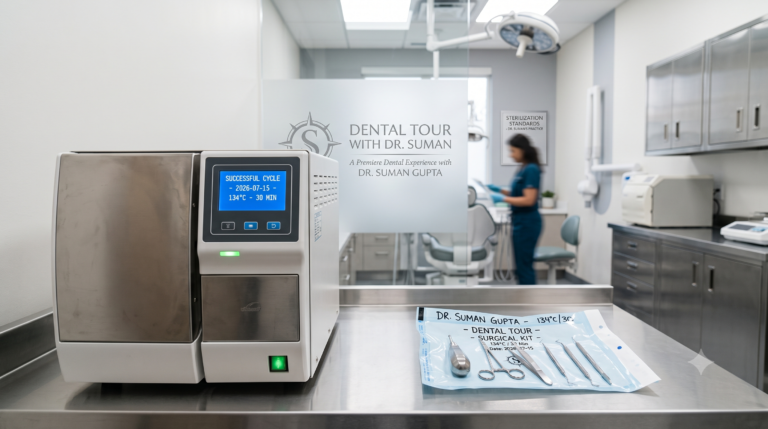
In high-end Indian clinics, cross-contamination prevention is an absolute science. Look for practices that transparently display a Class B Autoclave workflow. Class B autoclaves use a vacuum system to ensure steam penetrates the most complex, hollow dental instruments completely, killing 100% of microbial life. Instruments should always be unsealed from sterile, single-use pouches right in front of you.
2. National & International Accreditations
The most reliable stamp of safety in Indian healthcare is NABH (National Accreditation Board for Hospitals & Healthcare Providers) certification. NABH standards are exceptionally rigorous, auditing everything from a clinic’s infection control protocols to patient data privacy and emergency medical readiness. Many top dental clinics also align with ISO 9001:2015 quality management systems.
3. Advanced Digital Diagnostics (Minimizing Human Error)
Surgical safety is heavily tied to pre-operative planning. Ten years ago, placing an implant relied significantly on two-dimensional X-rays and tactile feel. In 2026, premier clinics utilize 3D CBCT (Cone Beam Computed Tomography) scans to map your jawbone, nerve pathways, and sinus cavities down to the millimeter.
By combining these 3D scans with virtual implant planning software, the dentist can execute computer-guided surgeries, which drastically cuts down surgical time, reduces post-operative swelling, and eliminates the risk of nerve damage.
Material Safety: What Goes Into Your Mouth?
A common worry is whether the materials used in lower-cost countries are safe and biocompatible.
Top-tier Indian implantologists work exclusively with the exact same global manufacturing leaders found in Western practices. When undergoing major restorative work, you should ensure your provider utilizes globally traceable systems:
- Implants: Titanium or zirconia posts from Nobel Biocare (Sweden), Straumann (Switzerland), or BioHorizons (USA). These come with official product identification tags and lifetime global warranties.
- Prosthetics: CAD/CAM milled monolithic zirconia or E.max ceramics. These materials are incredibly bio-inert, highly resistant to chipping, and cause zero allergic reactions in the gum tissue.
How to Verify Safety Safely: A 3-Step Checklist
Before booking your flights and wire-transferring deposits, run your prospective clinic through this objective vetting process:
- Check for an MDS, Not Just a BDS: Ensure the clinician handling your surgery holds a Master of Dental Surgery (MDS) in Prosthodontics or Oral Surgery. A basic BDS degree is fine for general dentistry, but full-mouth tracking requires specialized postgraduate training.
- Request a Clear Continuity of Care Plan: Safe dentistry doesn’t end when the stitches are placed. Ask the clinic exactly how they handle post-operative check-ups, what protocols they have for unexpected complications, and whether they provide detailed clinical notes for your dentist back home.
- Look for Real Video Testimonials: Written reviews can be fabricated. Look for long-form video interviews of actual patients from the US, UK, or Canada speaking candidly about their experience, the cleanliness of the clinic, and their long-term healing progress.
The Verdict
Is it safe? Yes, absolutely—provided you do your homework. By filtering out the budget neighborhood practices and aligning yourself with accredited specialists who prioritize digital diagnostics, premium materials, and strict sterilization, you can achieve a world-class smile for a fraction of the cost back home.
If you are ready to evaluate a specialist objectively, it helps to know exactly what clinical and infrastructural standards to look for in a provider. Take a look at our comprehensive guide on best implantologist in Mumbai for foreign patients to learn how to screen doctors, confirm technology standards, and guarantee a seamless medical vacation.