When people think about getting dental treatment abroad, the first concern is rarely cost.
It’s safety.
You might be open to traveling. You may even be comfortable with the idea of treatment in another country. But the real question sits quietly in the background.
How do I know I’m choosing the right clinic?
That question is at the heart of why many international patients spend weeks researching before committing. And it’s also why dental tourism in India has grown steadily, not overnight. Trust is built slowly, through information, experience, and honest conversations.
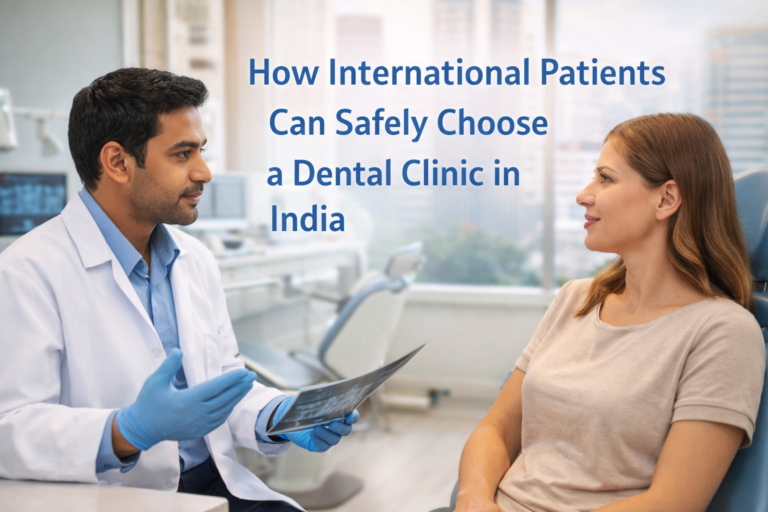
This blog isn’t here to sell you on anything. It’s here to help you make a clear-headed decision, especially if you’re considering treatment in India and trying to understand what “safe” really looks like in practice.
Why safety feels like the biggest hurdle for overseas patients
If you’re coming from the US, UK, or Europe, your reference point is very specific. Regulated clinics. Clear consent forms. Predictable systems.
When you look at treatment abroad, especially somewhere unfamiliar, it’s natural to worry about:
- hygiene standards
- dentist qualifications
- materials being used
- what happens if something goes wrong
- follow-up care once you’re back home
These concerns aren’t unreasonable. In fact, good clinics expect them. The difference between a reliable clinic and a risky one often lies in how openly these questions are addressed.
What “safe” actually means in a dental clinic
Safety in dentistry isn’t one single thing. It’s a combination of systems working together.
At a minimum, a clinic treating international patients should demonstrate:
- consistent sterilization protocols
- traceable materials and implants
- documented treatment planning
- clear patient consent
- emergency readiness
In India, reputable clinics often follow ISO or NABH-aligned protocols, which focus on hygiene, patient handling, documentation, and infection control. These aren’t marketing badges. They’re operational standards.
When clinics talk about safety, pay attention to how they explain it. Vague assurances are less helpful than specific processes.
Dentist experience matters more than the clinic décor
A modern-looking clinic can be comforting, but it’s not the deciding factor.
What matters more is:
- how long the dentist has been practicing
- how many similar cases they’ve handled
- whether they routinely treat overseas patients
- how they explain risks and limitations
Many dentists involved in dental tourism in India have postgraduate training (MDS) and additional certification in implantology or prosthodontics. Some have trained or attended continuing education programs abroad.
A good sign is when a dentist explains why a particular approach suits your case, not just what they plan to do.
Understanding implant brands and materials without getting technical
You don’t need to be an expert in dental materials. But you should know what’s being placed in your body.
Common implant systems used in India include:
- Straumann
- Nobel Biocare
- Osstem
- MIS
These are widely used internationally and backed by long-term clinical data. Reputed clinics will tell you:
- which brand they’re using
- where it’s manufactured
- whether it comes with documentation or warranty
If a clinic avoids naming the implant system or says “it’s all the same,” that’s a red flag.
Why many overseas patients narrow their search to Mumbai
India is a large country, and dental care quality varies by region. Over time, many international patients researching clinics end up focusing on Mumbai.
This isn’t accidental.
Mumbai offers:
- better international flight connectivity
- advanced dental labs capable of faster turnaround
- a high concentration of specialists
- experience dealing with short-stay patients
For people considering dental tourism in Mumbai, the city’s infrastructure reduces uncertainty. Treatment planning becomes easier when logistics, labs, and follow-up coordination are more predictable.
That doesn’t mean good clinics don’t exist elsewhere. But Mumbai often feels simpler for first-time visitors.
How experienced clinics handle international cases differently
Clinics that regularly treat overseas patients tend to operate differently from local-only practices.
They usually:
- schedule appointments closer together
- plan treatment around travel dates
- provide written summaries and reports
- share implant details for future reference
- remain available for post-treatment queries after you return home
This approach doesn’t rush treatment. It respects the fact that you can’t keep flying back for minor follow-ups.
When clinics understand this reality, patient stress drops significantly.
Questions you should always ask before committing
Before you book flights or pay a deposit, ask these questions. A good clinic won’t hesitate.
- Who will perform the procedure, and what’s their experience with similar cases?
- Which implant or material will be used, and why?
- What are the possible complications in my case?
- What follow-up care will I need after returning home?
- What documentation will I receive?
Clear answers build confidence. Defensive or vague replies don’t.
Red flags patients often miss
Some warning signs aren’t obvious at first glance.
Be cautious if:
- prices are quoted without reviewing scans or reports
- guarantees are offered without caveats
- everything sounds “too easy”
- no risks are mentioned at all
Ethical dentistry includes discussing what might not work. Clinics that skip this conversation aren’t doing you a favor.
What happens after you return home
This is one of the most overlooked parts of treatment planning.
Ask how the clinic handles:
- post-treatment queries
- minor issues like discomfort or bite adjustments
- communication with your local dentist if needed
Most clinics involved in dental tourism provide digital records and remain accessible by email or video call. That continuity is part of what makes treatment abroad workable.
Why this decision deserves time and patience
Choosing a dental clinic in another country isn’t something to rush. And it shouldn’t be.
The reason dental tourism in India has gained credibility is because patients took the time to research, ask questions, and share honest experiences afterward.
India, and Mumbai in particular, has earned trust through consistency, not promises.
A grounded takeaway
Safe dental treatment isn’t about finding perfection. It’s about reducing uncertainty.
When clinics are transparent, experienced, and realistic, patients feel in control. And that sense of control matters just as much as the treatment itself.
If you approach this decision carefully, choosing dental care in India can feel less like a leap of faith and more like a well-informed choice.
FAQs
1. How can I verify a dental clinic in India before traveling?
Check dentist credentials, ask for treatment plans, review implant brands, and read independent patient reviews.
2. Are dental clinics in India regulated?
Yes. Many clinics follow ISO or NABH-aligned protocols and are registered with dental councils.
3. Is Mumbai safer than other cities for dental tourism?
Mumbai offers better connectivity, labs, and specialist availability, which helps overseas patients.
4. What if I face issues after returning home?
Reputed clinics provide documentation and remain available for follow-up communication.
5. Do Indian clinics use FDA-approved materials?
Most clinics treating international patients do. Always confirm the brand and origin.
6. Can my local dentist coordinate with an Indian clinic?
Yes, many clinics provide reports and are open to coordination if required.