
If you’ve searched for dental treatment abroad, chances are this question crossed your mind almost immediately:
“Is dental tourism in India actually safe?”
That hesitation is normal. You’re considering treatment in another country. You’re thinking about infection control, training standards, materials, and what happens if something goes wrong after you return home.
Cost might bring you to the idea.
Safety determines whether you move forward.
Let’s talk about it honestly.
The Real Concern Behind the Question
When patients ask if dental tourism in India is safe, they’re usually worried about a few specific things:
- Are hygiene standards comparable to Western clinics?
- Are dentists properly trained?
- Are implant brands authentic?
- What happens if there’s a complication?
- Will follow-up care be a problem?
These are fair concerns. And any responsible dentist should welcome them.
Safety isn’t about the country alone. It’s about the clinic, the systems in place, and the transparency you’re given before you ever board a flight.
What “Safe” Actually Means in Dentistry
Safety in dentistry isn’t just about wearing gloves and masks. It’s built on systems.
Here’s what truly matters.
1️⃣ Sterilization and Infection Control
Reputable clinics in India follow strict sterilization protocols, often aligned with ISO standards or NABH healthcare guidelines. Instruments are autoclaved, surfaces are disinfected between patients, and disposables are used wherever required.
A good clinic will explain this process without hesitation.
2️⃣ Dentist Qualifications
India produces thousands of dental graduates every year. Only a small percentage specialize further in implantology, prosthodontics, or oral surgery.
Many dentists treating international patients hold:
- MDS postgraduate degrees
- Implantology certifications
- Training in global implant systems
- High case volumes in complex procedures
Experience matters more than location.
3️⃣ Implant Brands and Materials
A safe clinic will clearly tell you which implant system is being used.
Common global systems used in India include:
- Straumann
- Nobel Biocare
- Osstem
These are internationally recognized brands with long-term clinical research behind them.
If a clinic avoids naming the brand, that’s a red flag.
4️⃣ Documentation and Transparency
Before committing to treatment, you should receive:
- A written treatment plan
- A breakdown of procedures
- Estimated timelines
- Clear post-treatment instructions
Transparent documentation is a strong indicator of professionalism.
Are Indian Dental Clinics Regulated?
Yes. Dentists in India are registered under the Dental Council of India (DCI). Many high-standard clinics also align with:
- NABH (National Accreditation Board for Hospitals & Healthcare Providers)
- ISO quality systems
You can even verify certain certifications online.
This regulatory framework is one reason dental tourism in India has grown steadily rather than overnight. Systems are in place. Patients are better informed than ever.
How Dental Tourism in India Compares to Western Clinics
Here’s where perspective matters.
Clinics in the US or UK often operate with higher overhead costs. That affects pricing. But pricing doesn’t automatically equal safety.
In India, especially in cities like Mumbai:
- Dentists often handle higher case volumes.
- Implant systems used are globally recognized.
- Digital imaging and CBCT technology are widely available.
- English communication is standard.
When patients look into dental tourism in Mumbai, they often find infrastructure comparable to major Western cities, just at a different cost structure.
The difference is economics, not necessarily quality.
What Actually Makes a Clinic Unsafe (Anywhere in the World)
Safety risks aren’t exclusive to one country.
Be cautious if:
- You’re given a price without reviewing scans.
- The clinic promises guaranteed results without discussing risks.
- Implant brands aren’t disclosed.
- There’s no written documentation.
- Follow-up care isn’t discussed.
These warning signs apply whether you’re in London, New York, or Mumbai.
A safe decision isn’t about geography. It’s about due diligence.
Why Many International Patients Choose Mumbai
India is large, and quality varies by region. Mumbai stands out for practical reasons:
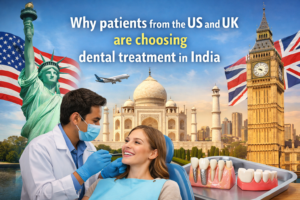
Why international patients are choosing India?
- Direct international flight access
- English-speaking professionals
- Advanced dental labs
- Reliable post-treatment coordination
- Established clinics experienced with overseas patients
That’s why dental tourism in Mumbai continues to attract patients from the US, UK, and Middle East.
The infrastructure reduces uncertainty.
Who Should Think Twice About Dental Tourism
Honesty builds trust.
Dental tourism may not be ideal for:
- Patients with unstable medical conditions
- Those needing frequent long-term monitoring
- Individuals unable to travel comfortably
- Cases requiring multiple extended visits over many months
In such cases, local care may be more practical.
Good clinics will tell you this upfront.
What Happens After You Return Home?
This is a major concern.
Reputable clinics provide:
- Implant brand documentation
- Treatment records
- Digital scans if required
- Ongoing communication via email or video consultation
Most general dentists abroad can continue maintenance once proper documentation is provided.
Continuity doesn’t end at the airport.
So… Is Dental Tourism in India Safe?
Yes — when you choose carefully.
India has qualified dentists, global implant systems, and regulated clinics. Cities like Mumbai offer strong infrastructure for international patients.
But safety doesn’t happen automatically. It comes from asking the right questions, reviewing documentation, and choosing experience over marketing.
If you approach it thoughtfully, dental tourism in India can be a well-informed, secure decision.
FAQs
Is dental tourism in India regulated?
Yes. Dentists are registered under the Dental Council of India, and many clinics align with NABH or ISO standards.
Are dental implants in India FDA-approved?
Many clinics use globally recognized implant brands that meet international safety standards.
How do I verify a dental clinic in India?
Request dentist credentials, implant brand details, and a written treatment plan.
What if something goes wrong after I return home?
Reputable clinics provide documentation and remain available for follow-up communication.
Is Mumbai safer than smaller cities?
Mumbai offers stronger infrastructure, advanced labs, and better international connectivity.
How long should I stay in India for implants?
Most cases require around 6–10 days depending on the procedure.